#MissionPanama: Why we must protect the Chiriquí mangroves in Panama
By Restor Communications
·
·
4 min read
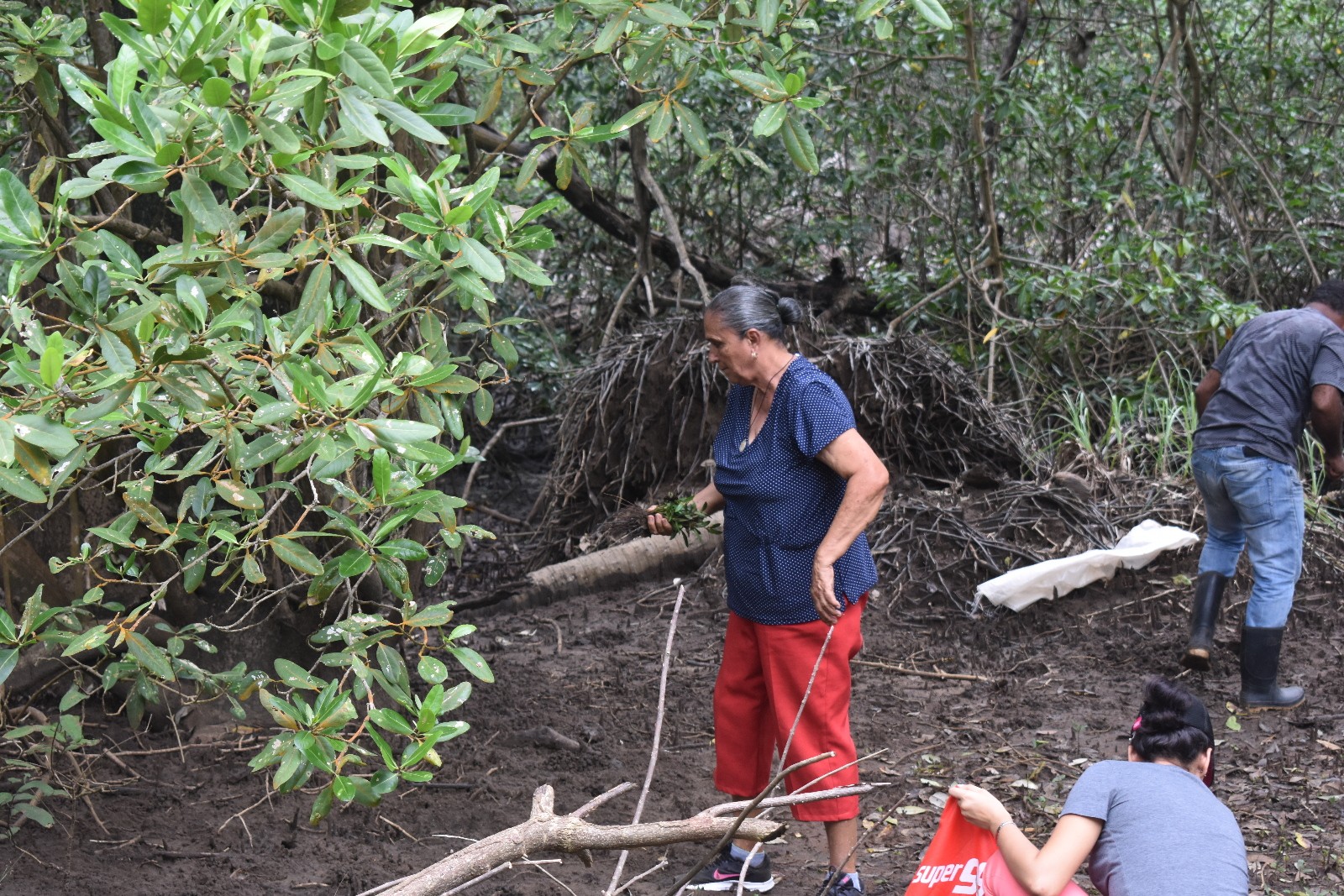
Along Panama's Pacific coast lies one of the most intact mangrove ecosystems in the Americas. Covering nearly 80,000 hectares, the Chiriquí mangroves protect communities from storms, store vast amounts of carbon, and support extraordinary biodiversity. Today, they face a threat that could fundamentally alter the landscape.
A proposed development, the Puerto Barú port, intends to dredge a channel 100 meters wide and 11 meters deep through these waters. Proponents argue the port could strengthen regional trade and economic development. However, critics contend that the environmental risks have not been adequately assessed.
To understand exactly what is at stake, Restor and the Tropical Landscape and Climate Program conducted a deep-dive independent scientific assessment of the region. The findings reveal an ecosystem that ranks among the most ecologically significant mangrove landscapes on Earth.
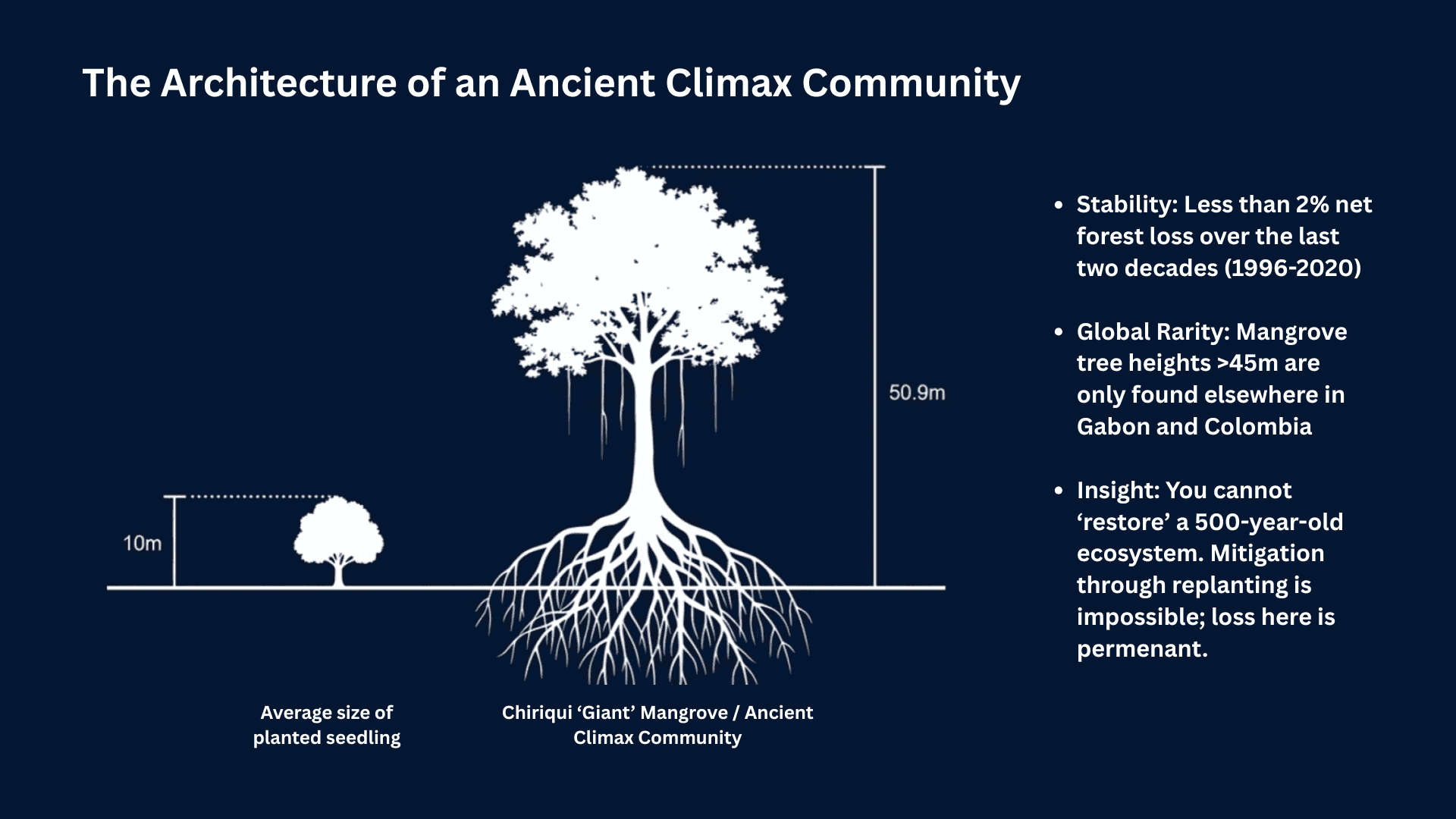
Home to "canopy giants" reaching heights of 50.9 meters
Globally, mangrove heights exceeding 45 meters are incredibly rare, found only in isolated refugia like Gabon or the San Juan River in Colombia. These heights indicate a stable "climax community," an old-growth ecosystem that has remained undisturbed for decades. In a world where 82% of forests are currently degraded, these mangroves represent the highest tier of ecological integrity. They are a relic of what coastal ecosystems look like when left to thrive.
A Carbon Vault
The Chiriquí mangroves hold a Total Ecosystem Carbon Stock (TECS) of 14.5 million tonnes. This represents 24% of Panama's entire national blue carbon stock in a single contiguous site.
The investigative concern lies in the "carbon bomb" effect. For millennia, these mangroves have stored organic carbon in thick, anaerobic mud. Because this soil is waterlogged and lacks oxygen, decomposition is nearly non-existent. However, dredging 9 million cubic meters of seafloor exposes this ancient peat to oxygen, triggering a massive chemical release. Once released, this carbon cannot simply be restored by replanting trees elsewhere. It represents the loss of a carbon store that has accumulated over centuries.
A $17 Million Green Shield
Nature provides services that remain invisible until they are destroyed. In Chiriquí, these mangroves serve as a "green shield" for the city of David, a metropolitan hub of 130,000 people, and its international airport. This barrier is the only thing standing between these assets and the intense seasonal storms that batter the Pacific coast. According to the Climate Risk Index, removing this natural barrier would lead to a staggering 1,700% increase in regional economic damage. By maintaining these mangroves, the region avoids $17 million in flood damages per year.
A Global Top 10% Biodiversity Stronghold
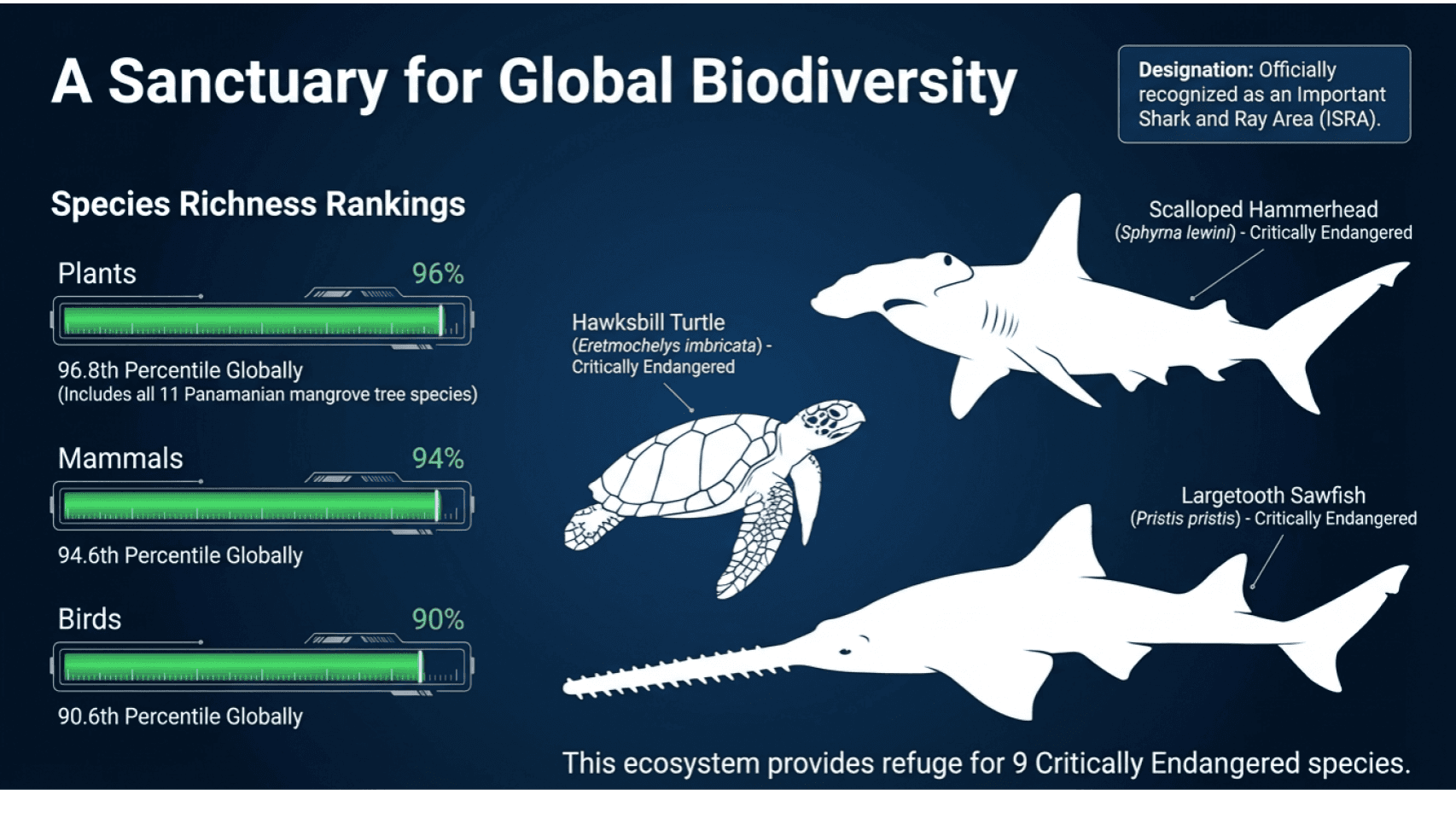
This region is a biological engine, supporting more plant and mammal species than 90% of the planet. Remarkably, all 11 of Panama’s mangrove tree species are found here at this single location, the highest diversity in the Americas. The area is also recognized as an Important Shark and Ray Area and is a Key Biodiversity Area (under the IUCN definition), serving as a critical nursery for threatened marine species.
The Human Stories Behind the Mangroves
Restor collaborated with The Oxygen Project to document three stories from people living and working in the region. Through three short films, local fishers, families, and community members share what these mangroves mean to their livelihoods and futures.
Conclusion: Precautionary Principle
The evidence is overwhelming. The question facing Panama is whether a globally significant ecosystem should be altered before its safety can be demonstrated beyond reasonable doubt. Decisions about the future of Puerto Barú are being made now. Once dredging begins, many of the ecological changes could be irreversible. This is a rare moment when public attention still has the potential to influence the outcome.
Join #MissionPanama:
The debate has already attracted international attention, including concerns from UNESCO about potential impacts on nearby protected marine areas. Help us gather 50,000 signatures calling for an independent review of the project's ecological impacts before irreversible damage is done: https://bit.ly/DefendTheMangroves